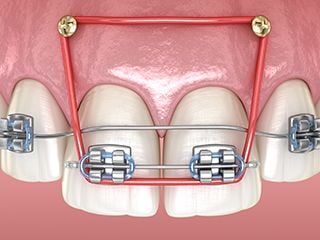
 Temporary anchorage devices (TADs), also known as “mini implants,” are titanium devices that are screwed into your gum and jaw. TADs act as anchors to support the movement of your teeth. They can be positioned in different areas of your jaw, depending on what anchorage and movement you need. Since they essentially become part of your body for a time, they are specifically compatible with human tissue.
A Simple Procedure
Your orthodontist will begin the procedure by using a local anesthetic to numb a small portion of your gum, specifically where the TAD will be anchored. When your TAD is inserted, you should only feel slight pressure. Some discomfort may occur after the procedure is finished and the anesthetic wears off. Over-the-counter pain medication will be enough to alleviate your residual pain.
It’s as simple to remove a TAD as it is to insert one. It is a quick and painless process that requires no anesthesia. After a few days have passed since its removal, the site generally heals with no lingering pain.
Taking Care of Your TAD
While the chance of your TAD getting infected is small, it’s important to prevent this from happening. The following are some helpful tips to take care of your TAD:
- After the TAD is inserted, it’s recommended to rinse your mouth twice a day for five days with an antimicrobial mouthwash. After five days, you can just dip your toothbrush into the mouthwash and gently clean around the TAD every day.
- Do not use an electric toothbrush while there are TADs placed in your mouth.
- Refrain from touching or fidgeting with your TAD.
- Your orthodontist may recommend that you switch from your normal toothpaste to one that kills oral bacteria.